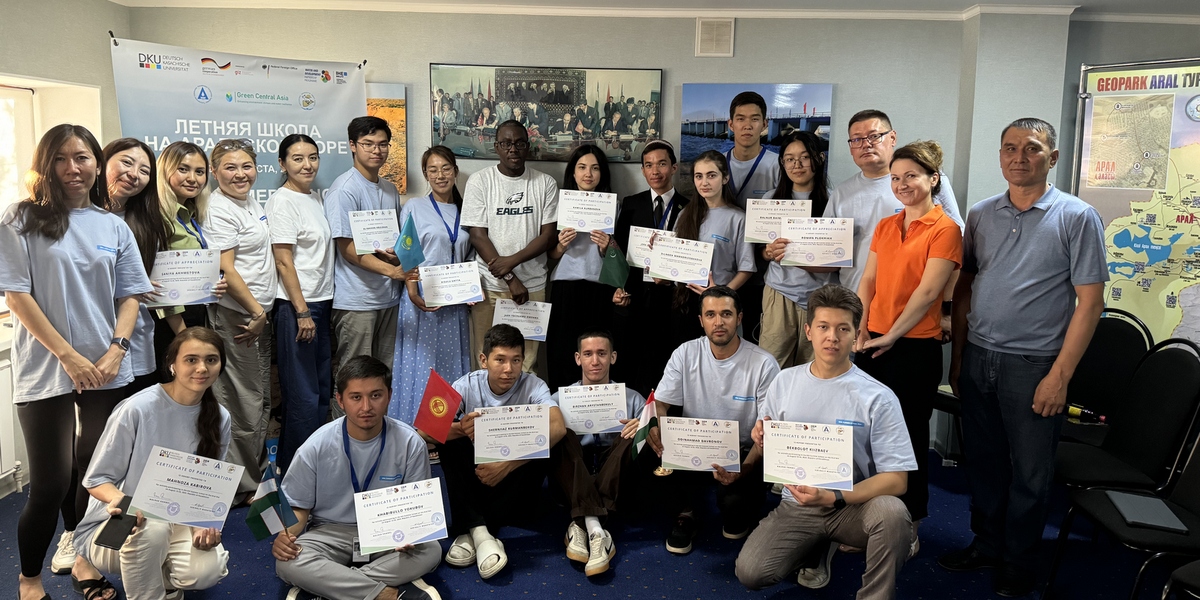
Summer schools provide students, early career water professionals and academic staff, including PhD students involved in teaching, with local knowledge and hands-on experience. They support the exchange of best practices and foster intercultural dialogue among the target regions.
Participants of the summer schools learn about local governance and water management practices and actively engage in the development of required nature-based solutions and socially just water economy approaches, thereby enhancing their social awareness.
Summer school alumni form an interregional professional network facilitating future cooperation and the exchange of experience gained in the Aral Sea Basin (ASB) and the Lake Chad Basin (LCB).
Knowledge exchange in the LCB is further strengthened through the participation of PhD students directly involved in the summer schools as early career experts from the University of Nigeria, Nsukka (UNN). Their expertise focuses on topics such the Integrated approach to the management of water in lakes and river basins, Weather and climate change on water resources availability and sustainability or Water resources management and governance.
The selection process for participation in both summer schools places special emphasis on representatives of indigenous communities in the LCB region, as well as marginalized groups (e.g. single mothers, women, migrants and people with lower socio-economic status). In the ASB region, priority is given to female participants seeking to strengthen their professional capacity and employability.